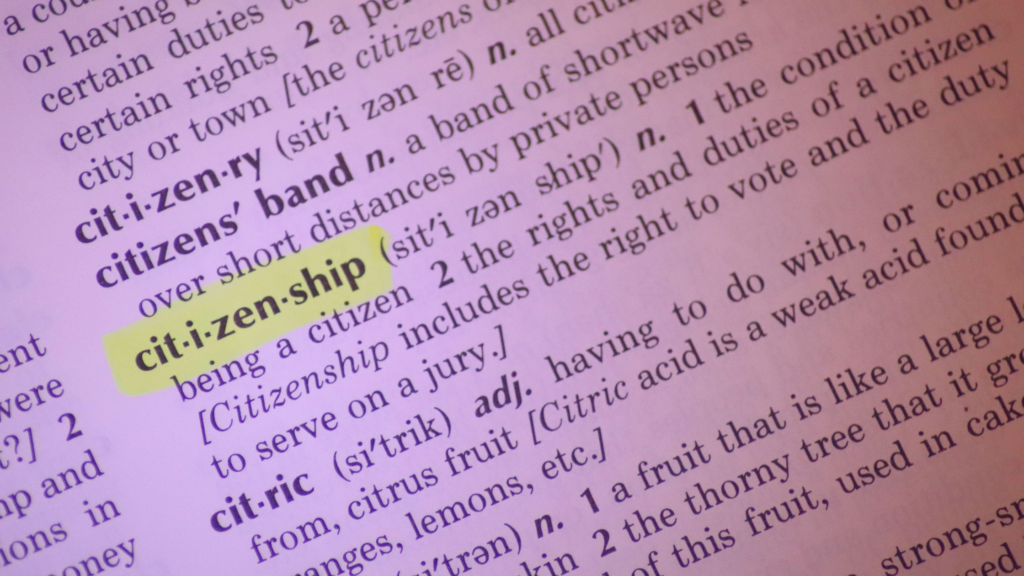
There are two basic ways to obtain citizenship is a particular country. Some countries give citizenship status to a child based on their parents’ citizenship. But in almost every country in the Western Hemisphere citizenship status is based on the child’s place of birth. The U.S. has long adopted unrestricted birthplace-based citizenship.
Prior to the end of the U.S. Civil war, an infamous Supreme Court case, Dred Scott v. Stanford found African Americans ineligible for citizenship based on their race. This was rectified by the 14 the Amendment to the Constitution which says, “All persons born or naturalized in the United States, and subject to the jurisdiction thereof, are citizens of the United States and of the state wherein they reside.” The words “subject to the jurisdiction “ (of the U.S) has been applied to deny U.S. citizenship to children of accredited foreign diplomats born in the U.S. because they have diplomatic immunity and cannot be prosecuted for crimes committed while in the U.S. It is clear that persons born in the U.S. to undocumented parents and to those parents legally in the U.S. on a temporary basis can be prosecuted for crimes. Would anyone want undocumented immigrants and their children to not be subject to the jurisdiction of the U.S. criminal law?
In adopting the 14th amendment Congress repudiated the concept of denying citizenship in any way on race, heredity, or a parent’s immigration status. This was recognized in the 1989 landmark case U.S. v Wong Kim Ark in which case the Supreme Court concluded that the phrase “subject to the jurisdiction” referred to being required to obey U.S. Law.
On his first day in office, President Trump issued an executive order intended to end birthright citizenship for children of undocumented immigrants and children of people in the U.S. on a legal but temporary
basis. Reaction against this executive order was quick and robust. In just 3 days a Federal Court in Washington State called the order “Blatantly unconstitutional” and blocked implementation for 14 days. Less than 2 weeks later another Federal District Court Judge issued a preliminary injunction which prevents implementation of the executive order indefinitely until these cases are resolved. That means that people born in the U.S. to undocumented parents or parents with temporary U.S. status will continue to be citizens at birth.
There will be much more litigation about birthright citizenship, but it is clear that an Executive Order cannot override the U.S. Constitution. I fully expect that eventually, the current U.S. Supreme Court will uphold birthright citizenship.

- Protect Your Family: A Guide for Undocumented Parents with Children - May 5, 2025
- To Travel or Not to Travel? - March 24, 2025
- Birthright Citizenship – what is it and is this right in danger ? - February 10, 2025